
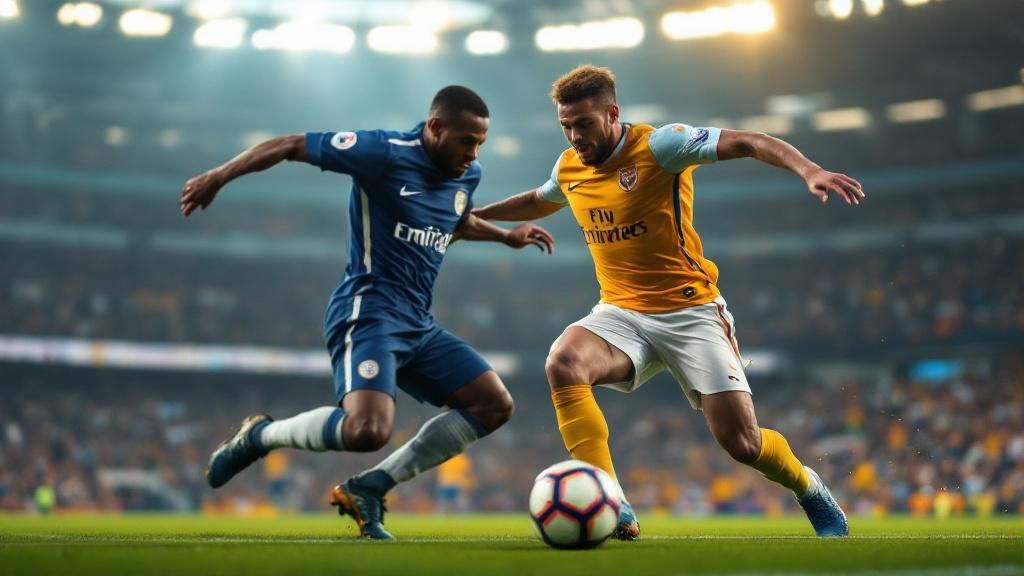
The art of wing play has undergone a remarkable transformation in modern football, yet the excitement of observing elite flank operators weave through defences remains as captivating as ever. Whilst the classic winger’s duties has developed substantially from the period of maintaining rigidly wide in a 4-4-2 formation, modern elite performers operate as aggressive attacking presences within three-man attacking formations, tasked with either reaching the byline or moving infield on their dominant foot to fashion attacking openings. This week, BBC Sport has listed the ten thrilling flank operators operating at the highest level—those performers in exceptional form, consistently delivering goals, crosses and dazzling runs that get fans on their feet. From young prodigies commanding eye-watering transfer fees to veteran international performers reshaping their roles, these are the game’s most electrifying players playing in wide positions.
The Evolution of Wingers in Contemporary Football
The position of the winger has experienced a seismic shift in tactical philosophy over the past two decades. Where once wingers were expected to hug the touchline religiously, providing width and sending in crosses from deeper areas, the modern game demands considerably more adaptability and tactical awareness from players operating on the flanks. Modern top-level wingers function in tight attacking systems, demanding they be equally comfortable moving infield onto their preferred foot as they are hugging the byeline. This tactical flexibility has transformed wingers from simple crossers into genuine goal-scoring threats in their own right, fundamentally altering how offensive moves is built at the highest level.
Pat Nevin, the ex Scotland international and BBC Radio 5 Live analyst, has pinpointed the crucial attribute that distinguishes the quick but ordinary and skilful from the genuinely exceptional. “Lots of them are quick, lots of them can beat players, but it is the ones who know when to make that final pass who are particularly special,” Nevin observes. This observation encapsulates the contemporary winger’s task: having explosive speed and dribbling prowess is no longer sufficient. The top wingers of today must combine individual brilliance with footballing intelligence, understanding when to release the ball at exactly the right time to break down defensive lines and fashion scoring opportunities for teammates.
- Modern wingers play in front-three systems rather than conventional four-four-two structures
- Cutting inside on the stronger foot is now just as vital as staying wide
- Goal-scoring output has become an core demand for elite wide players
- Creative awareness and delivery precision distinguish exceptional performers from the others
Emerging Talents Challenging the Established Leaders
Yan Diomande: Travelling from Abidjan to Leipzig
Few players have captured the imagination quite like Yan Diomande, the Ivory Coast teenager who barely registered on football’s radar a matter of months ago. Now, the 19-year-old is dominating every major transfer report, being linked with Europe’s top sides and attracting considerable interest. His journey to stardom is nothing short of remarkable. Born in Abidjan, Diomande made the daring choice to transfer to Florida aged just 15 on a student visa, armed with resolve and language-learning apps to become fluent in English. He undertook trials with various MLS clubs and Scottish giants Rangers, but ultimately decided to play for Spanish side Leganes in January 2023.
A year after his senior debut against Real Madrid, Diomande now performs impressively at RB Leipzig in the Bundesliga, where he has scored an impressive 10 goals and provided seven assists. His blistering pace has secured him the third-fastest speed in Germany’s top division. Perhaps most impressively, his transfer value has skyrocketed from below £20 million to £65 million in merely eight months, per Transfermarkt. This meteoric rise reflects not simply statistical output but authentic elite-level ability emerging before our eyes.
Kenan Yildiz: Juventus’s Emerging Prospect
At Juventus, the 20-year-old Kenan Yildiz has been awarded the number 10 shirt—a jersey previously worn by legendary names including Alessandro del Piero, Roberto Baggio and Michel Platini. The Turkish-born Germany international, recruited from Bayern Munich’s youth ranks at just 17, has been called upon to leading the Turin giants in pursuit of their storied success. Yildiz has responded magnificently, recording more goals and assists than any of his teammates this season whilst demonstrating the tactical sophistication befitting those storied predecessors.
Operating chiefly in advanced areas across his 40 games, Yildiz combines a striker’s clinical edge with a playmaker’s creative intelligence. His clinical edge in front of goal is paired with clinical finishes that demonstrate remarkable composure for a player of his age. The capacity to perform across the attacking third, coupled with his lethal finishing and smart positioning, positions Yildiz as a standout prospect of his generation, positioned to shaping an era at one of Europe’s most prestigious institutions.
Unconventional Brilliance and Tactical Innovation
The modern winger’s development has transcended the conventional positional boundaries that previously defined the role. Current elite wide players operate within flexible strategic systems where defensive duties naturally integrate with offensive drive. This tactical flexibility demands a new type of footballer—one capable of transitioning from defensive strength to creative excellence within seconds. Managers now utilise wingers as key elements of sophisticated pressing systems and build-up phase, requiring technical proficiency well past the basic need to beat an opponent and deliver a cross. The complexity of modern wide play has raised the role to something resembling art form.
What separates the world’s top wingers from their rivals is an instinctive grasp of when to keep the ball and when to produce devastating attacking moves. Pat Nevin, the former Scotland international and BBC Radio 5 Live analyst, identifies this intelligence as the key difference between capable and truly outstanding performers. “Lots of them are quick, lots of them can beat players, but it is the ones who know when to make that crucial pass who are truly special,” Nevin observes. This decision-making—the capacity to interpret defensive patterns and capitalise on narrow openings—transforms talented athletes into genuine match-winners capable of determine top-tier matches.
- Modern wingers function as part of fluid front threes rather than rigid wing slots
- Tactical versatility now requires defensive contribution alongside creative attacking play
- Astute positioning and final-pass timing differentiate exceptional players from merely talented ones
Federico Dimarco’s Defensive-to-Offensive Evolution
Federico Dimarco presents a fascinating case study in tactical development and tactical reimagining. Traditionally typecast as a full-back or wing-back, the Italian full-back has been completely transformed within Inter Milan’s 3-5-2 system under boss Cristian Chivu this season. Rather than occupying a conventional defensive lane, Dimarco has been given freedom to function as an attacking winger, delivering the attacking output and creative duties typically associated with progressive attacking players. This transformation demonstrates how contemporary tactical approaches challenge traditional positional boundaries entirely, allowing defenders to function as main creative contributors.
Dimarco’s tactical redeployment highlights Inter’s deep comprehension of today’s fluid game. His eagerness to push ahead combine with attacking teammates and generate scoring chances from wide areas has proved essential to the Nerazzurri’s campaign. The Italian’s performances contradicts conventional wisdom about positional specialisation, establishing that offensive capability surpasses the traditional boundaries between defensive and attacking roles. His showings embody how intelligent tactical deployment can tap into previously untapped potential within experienced squad members.
Europe’s Foremost Broad Talents in Prime Form
| Player | Club | Key Strength |
|---|---|---|
| Yan Diomande | RB Leipzig | Explosive pace and direct dribbling; third-fastest in Bundesliga |
| Kenan Yildiz | Juventus | Goal-scoring prowess combined with creative playmaking ability |
| Federico Dimarco | Inter Milan | Attacking output from wing-back position; creative crossing |
| Vinicius Junior | Real Madrid | Pace, dribbling and conversion of chances into goals |
| Florian Wirtz | Bayer Leverkusen | Technical excellence and intelligent positioning off the ball |
| Jamal Musiala | Bayern Munich | Dribbling ability and finishing from wide areas |
The modern landscape of top-tier wide play is dominated by players who demonstrate far more than simple pace and ball control. These modern practitioners blend technical excellence with tactical awareness, recognising when to take on a defender and crucially, when to release the ball at the optimal moment. The divide between ordinary wingers and genuinely elite performers lies in this ability to make decisions—the ability to identify defensive vulnerabilities and convert them into concrete attacking opportunities that trouble opposing goalkeepers.
What unites Europe’s top-tier wide talents is their flexibility within attacking formations. Whether operating in traditional wide positions or moving inside to create numerical advantages, these players display exceptional versatility. Their output surpasses simple numbers; they generate the compelling moments of brilliance that shape today’s most captivating games. These are the players who inspire crowds to rise, whose performances change the game’s direction and ultimately determine whether top-tier sides accomplish their seasonal objectives.
The Mastery of Ball Control and Play Management
Vinicius Jr and Lamine Yamal: Dribbling Wizards
Vinicius Junior has established himself as one of football’s most dazzling talents, merging explosive pace with an near-magical capacity to weave through packed defences. The Real Madrid winger demonstrates an intuitive grasp of positioning and tempo, drifting past opponents with deceptively easy grace whilst staying composed in the final third. His showings throughout the year have demonstrated a maturity beyond his years, evolving from a exciting yet sometimes profligate talent into a regularly lethal finisher who challenges even the most steadfast defences with concerning frequency.
Lamine Yamal, in the meantime, represents the next generation of Barcelona’s excellence in wide play, showcasing technical skill that contradicts his youth. The Spanish young talent’s skill in controlling the ball in tight spaces, shifting it from foot to foot with fluid elegance, has drawn comparisons to some of the greatest playmakers in the club’s storied history. His calmness under pressure by defenders is noteworthy, seemingly unruffled by numerical disadvantages and repeatedly finding teammates in advanced positions with laser accuracy.
Michael Olise: Composure Paired with Creativity
Michael Olise has proven to be one of Europe’s most compelling attacking talents, contributing a refreshing blend of refined skill and intelligent movement to his club’s offensive capabilities. The Chelsea winger possesses an outstanding aptitude to collect the ball in congested areas and quickly establish separation through refined feints and directional changes. His decision-making remains consistently sharp, recognising when to burst forward with intensity and when to deliver a precisely weighted ball into the path of oncoming teammates, rendering him a headache for opposing full-backs.
What sets Olise apart from many peers is his composure under pressure and his refusal to panic when dealing with multiple defenders. Rather than pushing things forward through direct dribbling, he displays the maturity to recycle possession effectively, stretching opposition defences through astute movement and off-the-ball work. This controlled approach, combined with occasional moments of stunning individual brilliance, has established him as a genuinely complete attacking player able to affecting matches in multiple ways throughout the entire game.
- Exceptional individual dribbling prowess distinguishes top-tier wingers from solid operators
- Game control through smart positioning and spatial awareness matters just as much as pace
- Choice-making in attacking third separates exceptional talents from simply talented individuals
- Technical proficiency combined with tactical intelligence characterises contemporary elite wing play
